

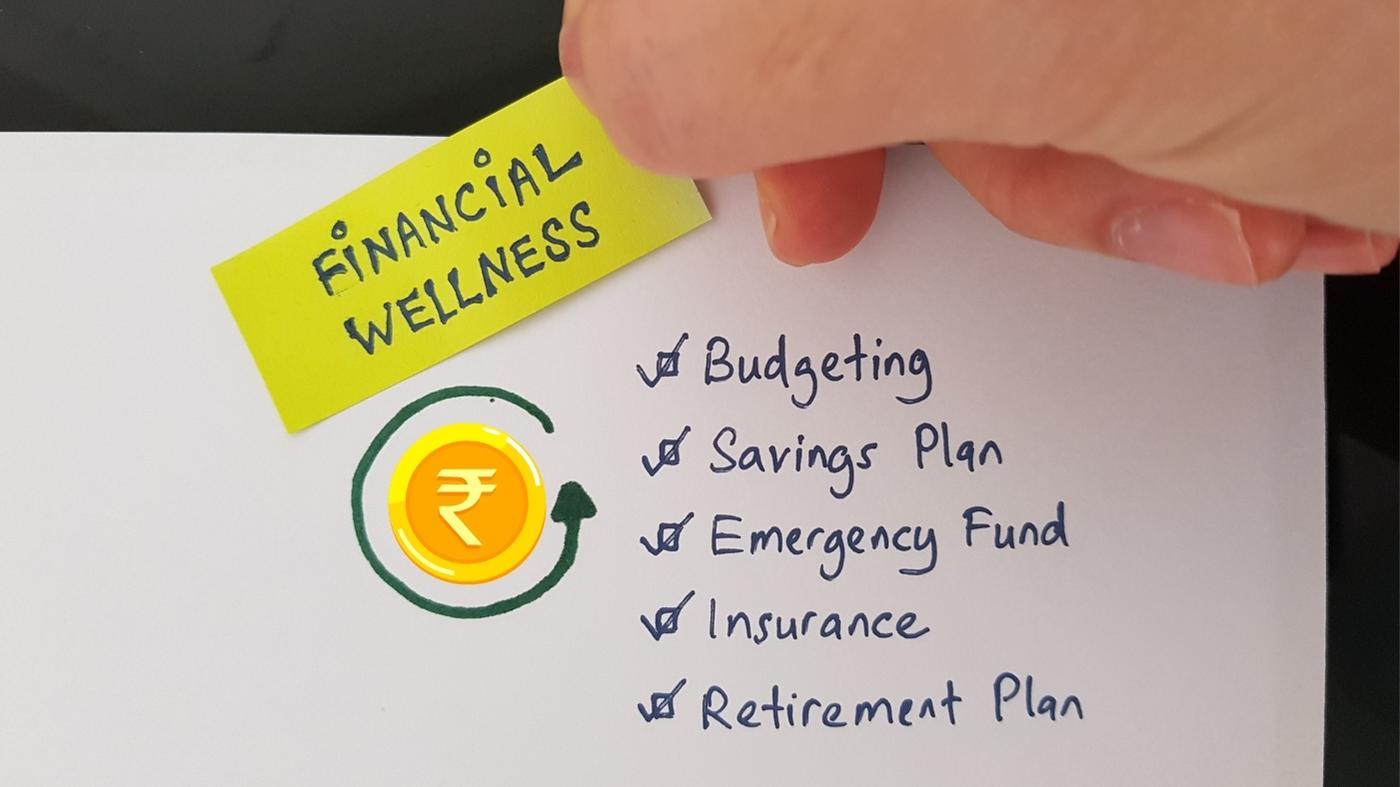
Introduction: Why Financial Wellness Matters
When most people hear the term financial wellness, they immediately think:
- “Am I saving enough?”
- “Am I investing in the right mutual funds or stocks?”
But true financial wellness goes far beyond saving and investing. It’s about how money supports your life, relationships, mental health, and long-term goals.
👉 Think of it like physical fitness: just as health isn’t only about weight loss, financial wellness isn’t only about how much you save. It’s about balance, confidence, and control.
1. What Is Financial Wellness?
Financial wellness is the state of being secure, stress-free, and confident about money. It means you:
- Can meet day-to-day needs without anxiety.
- Have an emergency cushion for uncertainties.
- Invest wisely for long-term goals.
- Balance financial stability with personal happiness.
💡 Definition by the Consumer Financial Protection Bureau (CFPB):
Financial wellness encompasses having control over day-to-day finances, the ability to absorb financial shocks, being on track to meet financial goals, and having the freedom to make informed life choices.
2. The Four Pillars of Financial Wellness
2.1. Stability
- Regular income.
- Budgeting effectively.
- Staying out of high-interest debt.
2.2. Security
- Adequate insurance (health, life, term, motor).
- Emergency fund (6–12 months’ expenses).
- Contingency planning.
2.3. Growth
- Investments (mutual funds, PPF, NPS, equities).
- Tax planning.
- Career development (higher education, upskilling).
2.4. Freedom
- Ability to spend on lifestyle without guilt.
- Pursue hobbies/passions.
- Plan guilt-free vacations, early retirement, or entrepreneurship.
👉 Financial wellness is not just survival—it’s thriving with money confidence.
3. Why Financial Wellness Is More Than Just Saving & Investing
a) Because Debt Can Undo Your Savings
- Many young professionals save 20% but carry credit card debt at an annual interest rate of 36%, which causes their net worth to shrink.
- Case Study: Rohit, a 28-year-old engineer in Bengaluru, had ₹5 lakh in mutual funds but also ₹3 lakh in credit card debt. His “investments” were being eroded faster than they grew.
b) Because Health & Insurance Matter Too
- Without adequate health insurance, one hospitalization can wipe out years of savings.
- Example: A middle-class family in Delhi had a ₹10 lakh FD corpus. A medical emergency cost them ₹7.5 lakh out-of-pocket, derailing their child’s education plan.
c) Because Lifestyle Choices Define Balance
- Financial stress isn’t only about low income—it’s about uncontrolled spending.
- Without mindful spending, even high earners can feel financially strained.
4. Common Misconceptions About Financial Wellness
- “It’s just about investments.” ❌ Wrong. It’s about budgeting, protection, and goals.
- “If I earn more, I’ll be financially well off.” ❌ Not true. Many high earners live paycheck to paycheck.
- “I’m too young to worry about it.” ❌ The earlier you start, the easier it gets.
- “Insurance is a waste of money.” ❌ Insurance protects your financial foundation.
- “Budgeting restricts life.” ❌ Budgeting gives freedom, not restriction.
5. Why Financial Wellness Is Critical Today
- Rising lifestyle inflation: Salaries rise, but so do EMIs, vacations, and gadgets.
- Joint family responsibilities: Supporting parents, siblings, and in-laws.
- Healthcare inflation: Medical costs rise 12–15% annually.
- Retirement risk: With nuclear families, children may not be a financial support.
👉 In India, financial wellness is not optional—it’s survival + growth.
6. Practical Steps to Achieve Financial Wellness
Step 1: Budget With Purpose
- Track expenses with apps (Walnut, Moneyfy, INDmoney).
- Use the 50-30-20 Rule or Zero-Based Budgeting.
Step 2: Build an Emergency Fund
- Minimum 6 months’ household expenses in liquid funds or FDs.
Step 3: Protect With Insurance
- Health insurance: ₹5–10 lakh family floater.
- Term insurance: 10–15x annual income.
- Motor & property cover.
Step 4: Eliminate Toxic Debt
- Pay off credit cards first (highest interest).
- Avoid personal loans for lifestyle spending.
Step 5: Invest for Goals
- Short-term (1–3 years): Debt/liquid funds.
- Medium-term (3–7 years): Hybrid funds.
- Long-term (7+ years): Equity mutual funds, NPS, PPF.
Step 6: Plan for Retirement
- Use SIP calculators to estimate needs.
- Example: A 30-year-old investing ₹10,000/month @12% CAGR → ~₹3.5 crore at 60.
Step 7: Balance Enjoyment With Discipline
- Allocate 10–15% of your income guilt-free for lifestyle expenses.
7. Case Studies: Financial Wellness in Action
Case Study 1: Meera, 32, IT Professional
- Earned ₹80,000/month but had no budget.
- Spent ₹20,000 on dining/online shopping.
- Shifted to 50-30-20 rule → Increased SIP from ₹2,000 to ₹12,000.
- After 5 years: Built a ₹9.6 lakh corpus.
Case Study 2: Sharma Family, 45 & 42, Jaipur
- Relied only on FDs.
- Daughter’s education abroad cost ₹30 lakh. FD returns + inflation mismatch caused partial loan dependence.
- After meeting MFD, shifted to SIPs in equity/debt mix. Now on track for retirement corpus.
Case Study 3: Aarav, 25, First Jobber
- Believed “too early to save.”
- Instead of spending ₹5,000/month on nightlife, I started SIPs.
- At 45, corpus projected: ~₹1.5 crore.
8. The Role of Mental Health in Financial Wellness
Money stress → anxiety, fights, insomnia.
Financial wellness includes:
- Clear communication with family
- Avoiding “money secrecy”
- Building confidence in decision-making
9. How MFDs (Mutual Fund Distributors) & Advisors Help in Financial Wellness
While DIY platforms provide tools, MFDs provide:
- Handholding & accountability
- Personalized goal-based planning
- Tax optimization strategies
- Behavioral coaching → stopping panic exits during volatility
👉 Just like a gym trainer makes you fitter faster, an MFD makes your financial journey smoother.
10. FAQs
Q1. How is financial wellness different from financial literacy?
- Literacy = knowledge; wellness = applying it to live a stress-free life.
Q2. Do I need a high income for financial wellness?
- No. It’s about managing what you have wisely.
Q3. Can homemakers achieve financial wellness?
- Yes, by being part of household decisions, having joint investments, and planning family goals.
Q4. Should I focus more on investments or insurance?
- Both are critical. Insurance protects, investments grow.
Q5. Is financial wellness a one-time goal?
- No, it’s a lifelong journey. Needs evolve with age, income, and family.
11. Final Thoughts: Redefining Financial Wellness
Financial wellness isn’t about being rich. It’s about:
- Having clarity in money matters
- Feeling secure about uncertainties
- Growing wealth in line with goals
- Enjoying life without guilt
💡 Money should be a tool, not a source of stress.
When you master this balance, you achieve true financial wellness—where your money works for you, your relationships flourish, and your life feels abundant.
Disclaimer
The information provided in this blog is for educational purposes only and should not be considered as financial, investment, or tax advice. Please consult a qualified financial advisor before making any investment decisions.
VSJ FinMart is an AMFI-registered mutual fund distributor (MFD) and does not provide investment advisory services. Mutual fund investments are subject to market risks; please read all scheme-related documents carefully before investing.